
A sealed bag can contain the wrong kit. Define component identity and count before selecting the bagger, then make the counter-to-bagger handoff and reject reconciliation part of the same batch trial.
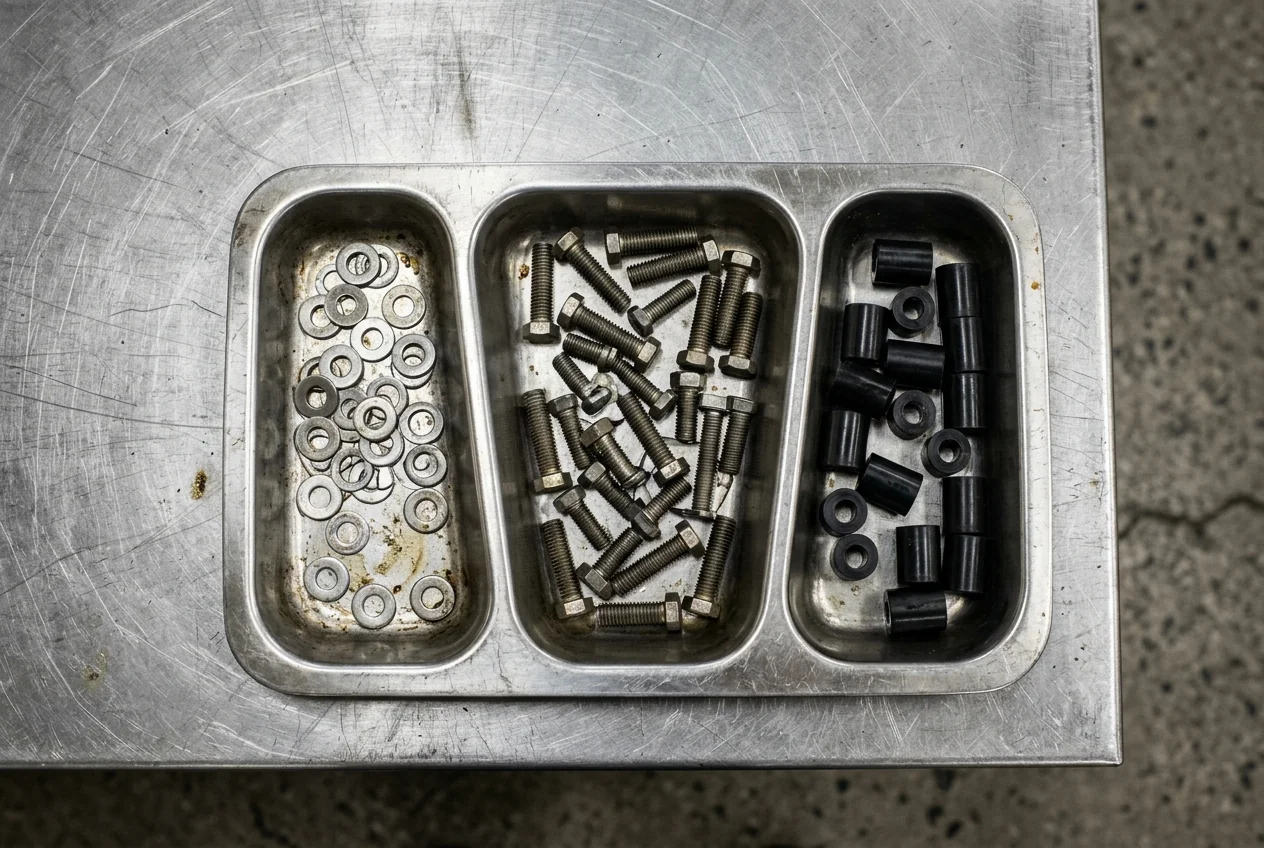
Contract kitting needs evidence that each required component reaches the correct bag. Start with the client’s bill of materials, map each part to a controlled feeding/counting method and record accepted kits separately from rejected bags. The matrix below supports that handoff; it does not assume that a weight check proves a mixed kit is complete.
Map the kit revision to each feed stream
Treat similar-looking components as separate identities where the bill of materials does. Record part revision, lot and quantity per kit. Then describe how the feed arrangement prevents substitution, mixing or an unconfirmed remainder at replenishment.
| Component field | Record before the run | Purpose |
|---|---|---|
| Client kit and revision | Approved bill of materials | Defines the complete kit |
| Part ID / revision | Approved component reference | Distinguishes similar parts |
| Required count | Quantity per accepted bag | Defines the counting task |
| Incoming lot | Traceable supply reference | Supports batch reconciliation |
| Feed stream | Assigned tray/hopper/manual position | Connects identity to delivery |
| Confirmation method | Agreed count/identity checks | Defines evidence for acceptance |
Audion’s published bagging examples include manual feeding, counting scales, counting machines and assembly-kit feed arrangements. These are different integration choices. The existence of a bagger does not show which of those functions is included or suitable for your components.
Qualify counting against the real part variation
Test the parts that production will receive. Stacked washers, interlocking shapes or changes in individual mass can affect the chosen method. Ask the counting-system supplier what must be singulated, what variation is permitted and how an uncertain count is handled.
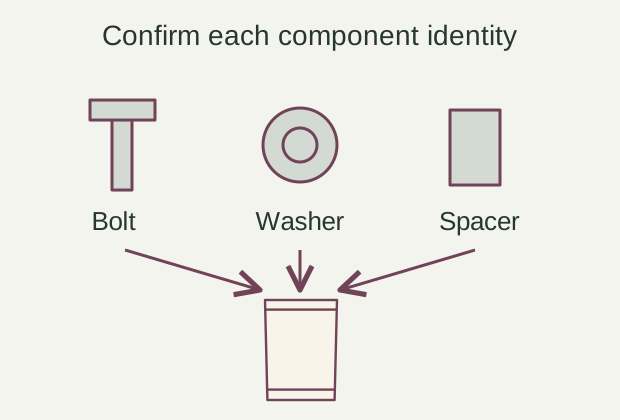
For a mixed kit, aggregate mass is an indirect check. Different wrong-component combinations may evade a total-mass decision, depending on the parts and acceptance limits. Do not convert a useful weight-screening step into a claim of identity verification. Agree how the application detects the errors that matter.
| Trial condition | Challenge to resolve | Record |
|---|---|---|
| Representative components | Repeatable feeding and counting | Sample lot and observations |
| Similar or easily confused part | Identity/substitution control | Deliberate challenge agreed with supplier |
| Replenishment | Old and new lot transition | Quantity and lot reconciliation |
| Partial group at a stop | Correct restart disposition | Held/rejected group reference |
| Counter/bagger interruption | Unambiguous transfer state | What was counted, released and sealed |
Use supplier-approved trial methods. The table defines questions, not instructions to defeat guards or disturb a running feeder.
Specify the handoff into the bag
Define the event that authorizes filling a bag and the event that confirms the counted group has transferred. Ask who owns a group between those events. A stop in that interval must have a known disposition so the next restart does not count the same group twice or omit it.
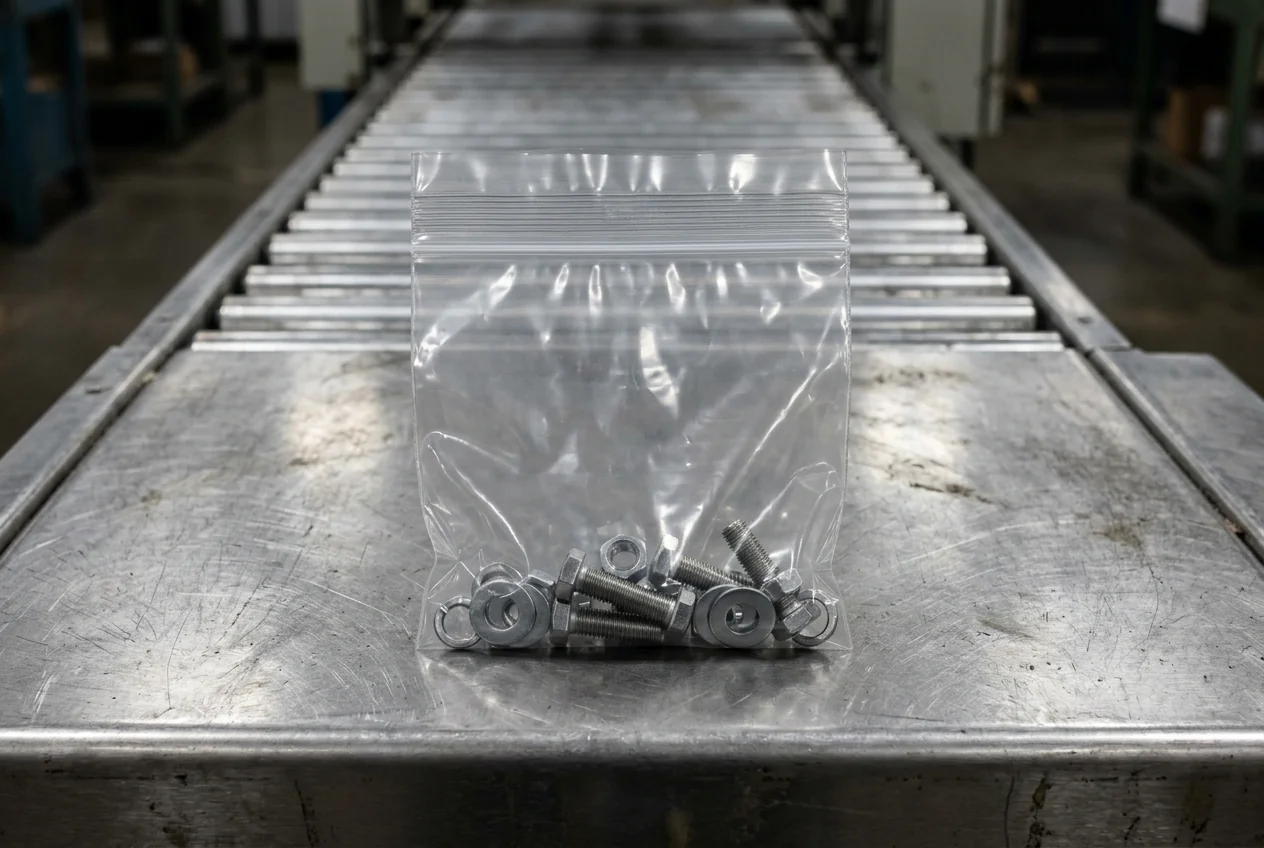
Include the actual bag construction and component load in sealing trials. Parts in the seal area, sharp edges and the filled shape are application checks. A successful empty-bag cycle only demonstrates part of the packaging task.
Reconcile good kits, rejects and loose components
Close the batch using separate bag and component records. A rejected bag may contain recoverable parts, but their return must follow the approved process and retain identity. Do not count a recovered part as both scrap and available stock.
| Batch closeout field | Enter |
|---|---|
| Kit / BOM revision and component lots | ___ |
| Components issued and returned by ID | ___ |
| Accepted kits and quantity in each kit | ___ |
| Rejected bags / partial groups | ___ |
| Rework, recovery or scrap disposition | ___ |
| Unexplained difference and hold owner | ___ |
For each component, reconcile issued quantity against quantities in accepted kits, held/rejected material, approved returns and recorded scrap. Investigate any difference before treating the bag count as a complete production record.
Transfer a batch the next shift can understand
Keep the feed assignment, current lot, unresolved reject and approved restart state together. If the client changes the bill of materials, issue a new controlled record and assess the qualification impact. Similar bag dimensions do not make two kits interchangeable.
The multi-SKU planning guide helps place material and release readiness on the schedule. Use it when a kitting cell shares bagging capacity with other client work.
Methods and sources
Audion’s official bagging examples and WeighPack’s published bagger-selection discussion provide the context for separate feeding and packaging functions. A counting/weighing datasheet URL returned 404 and was excluded. Identity checks, transfer-state questions and reconciliation tables are editorial proposals, not performance guarantees or validated traceability systems. Sources were retrieved on 16 October 2026. Continue with kitting automation.
Source documents read:
- Speedpack bagging application examples (retrieved 16 October 2026).
- How do I know which bagging machine I need? (retrieved 16 October 2026).